




Get a Quote
In the era of "Industry 4.0," the vertical expansion of manufacturing space is no longer a luxury but a strategic necessity. High-rise steel factories represent the pinnacle of modern structural engineering, yet their height introduces a formidable enemy: Lateral Loading. For global procurement managers and developers, ensuring that a facility can withstand typhoon-force winds and high-magnitude seismic events is the difference between a thriving asset and a catastrophic liability.
At our company, we recognize that resilience isn't just about "not falling down"—it’s about Operational Continuity. If a building sways too much, precision CNC machines lose calibration, and overhead cranes become death traps. This guide explores the cutting-edge strategies used to engineer stability into the world’s most demanding industrial environments.

While both are lateral loads, wind and seismic forces attack a steel structure in fundamentally different ways.
The Wind Challenge (Static & Dynamic): Unlike low-rise warehouses, high-rise factories act like giant sails. Wind pressure increases exponentially with height. Beyond simple pressure, engineers must account for Vortex Shedding—the phenomenon where wind creates alternating low-pressure zones, causing the building to vibrate perpendicular to the wind direction.
The Seismic Challenge (Inertial Force): Earthquakes don't "push" the building; they move the ground under it. The building’s own mass generates inertial forces. In a high-rise factory filled with heavy machinery on upper floors, this "top-heavy" nature can amplify ground acceleration, putting immense stress on steel connections.
To combat these forces, we move beyond simple post-and-beam construction.
Moment-Resisting Frames (MRF)
Steel’s natural elasticity is its greatest strength. MRFs allow the structure to absorb energy through the flexure of beams and columns. This system provides maximum architectural flexibility, allowing for large, unobstructed floor plans essential for assembly lines.
Buckling-Restrained Braced Frames (BRBF)
For seismic-prone regions (like the Pacific Ring of Fire), BRBFs act as the building's "fuses." During an earthquake, these specialized braces yield and dissipate energy without the steel buckling, protecting the primary gravity-load-carrying columns.
Outrigger and Belt Truss Systems
When height exceeds certain thresholds, we implement outrigger trusses that connect the central core to external columns. This significantly increases the Effective Depth of the building, slashing wind-induced sway by up to 40%.

Modern high-rise factory design borrows heavily from aerospace engineering. We no longer just "fight" the wind; we "manage" it.
Geometric Sculpting: By tapering the building or using rounded corners (chamfering), we break up wind flow, reducing the drag coefficient.
Tuned Mass Dampers (TMD): We often install a massive counterweight near the roof. When the wind pushes the building left, the TMD moves right, neutralizing the oscillation.
Viscous Dampers: Think of these as giant shock absorbers for buildings. They convert kinetic energy into heat, ensuring that even during a storm, the vibration on the factory floor is imperceptible to sensitive equipment.
Resilience is a product of metallurgy. For high-rise industrial applications, the choice of steel grade is critical:
High-Strength Low-Alloy (HSLA) Steel: Provides a superior strength-to-weight ratio, reducing the total "dead load" (the building's own weight), which in turn reduces seismic inertial forces.
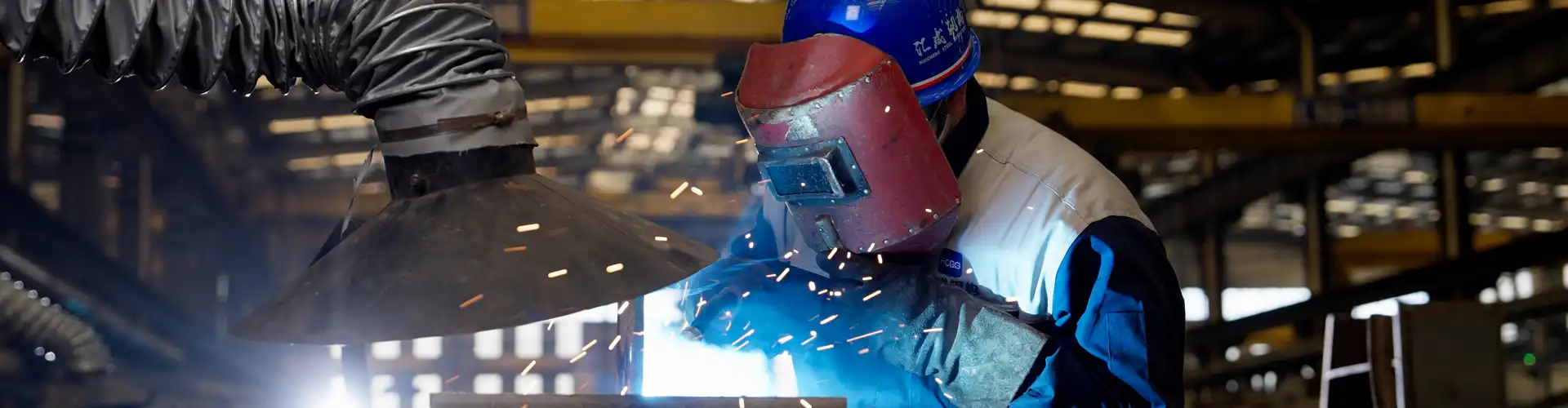
Lamellar Tearing Resistance: In heavy welded joints (common in high-rise cores), we specify steel with improved through-thickness properties to prevent catastrophic splitting under extreme tension.
Advanced Coatings: In coastal or chemically aggressive industrial zones, C5-M rated anti-corrosion coatings ensure the structural steel maintains its design thickness for its 50+ year lifespan.
Navigating the regulatory landscape is vital for insurance and safety auditing. Our designs strictly adhere to:
ASCE 7 (Minimum Design Loads): The global benchmark for wind and seismic calculations.
AISC 341 (Seismic Provisions for Structural Steel Buildings): Ensuring ductile detailing of connections.
Eurocode 3 & 8: Comprehensive standards for steel design and earthquake resistance used across EMEA markets.
Q: Does a high-rise steel factory cost significantly more than a traditional concrete structure?
A: While the raw material cost of steel may be higher, the Speed of Construction and reduced foundation requirements (due to lower weight) often lead to a lower "Total Cost of Ownership" and faster ROI.
Q: How do you protect precision machinery from building sway?
A: We use Micro-Vibration Analysis. By stiffening specific zones and using damping technology, we can keep floor vibrations within the strict tolerances required by semiconductor or high-end electronics manufacturing.
Q: Can an existing steel factory be retrofitted for better seismic resistance?
A: Yes. Through the addition of external bracing or base isolation systems, older steel structures can be brought up to modern safety standards without a complete teardown.
Engineering resilience into high-rise steel factories is an investment in Business Continuity. By integrating advanced damping, high-performance alloys, and intelligent structural geometry, we create industrial spaces that are as safe as they are productive.
Are you planning a vertical industrial project?
[Contact our Engineering Team today] for a preliminary Wind & Seismic Feasibility Study to ensure your investment stands firm against the elements.
Galvanized vs Painted Steel Structure: Which Anti-Corrosion Treatment Is Better?
2026-10-23Steel Factory Roofs: Choosing the Best Material for Your Climate
2026-10-19Smooth Shipment of Steel Structure Projects, Build Strength With Quality, Fulfill Commitments Through Reliable Delivery
2026-10-15Magnetic vs Bolted Steel Factories: Which Lasts Longer?
2026-10-12Address: No.1 Shuangxiang Road, Luoxin Industrial Park, Luoyang City
E-mail: info@hcggsteel.com
Hotline: +8618800767079
Create the greatest value for customers
Provide the best quality products and services
+8618800767079
info@hcggsteel.com
No.1 Shuangxiang Road, Luoxin Industrial Park, Luoyang City