English



Get a Quote
As steel buildings continue to gain popularity in industrial facilities, warehouses, logistics centers, commercial buildings, and other applications, selecting the right roof and wall panels has become an increasingly important part of building design. The right cladding system can have a significant impact on a building’s durability, energy efficiency, fire safety, weather resistance, and long-term maintenance costs.
Industry professionals point out that there is no single panel solution suitable for every steel building. The selection should be based on several factors, including building function, local climate, insulation requirements, fire resistance, wind loads, corrosion conditions, installation requirements, and overall project budget.
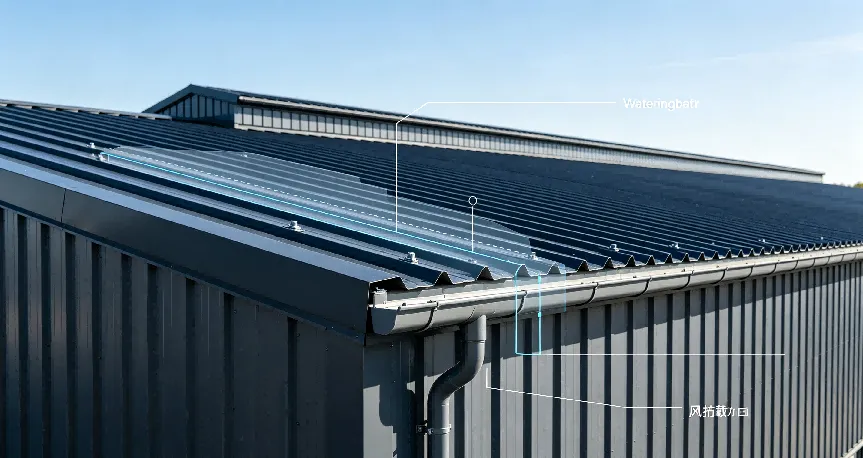
The roof is continuously exposed to rain, sunlight, wind, and temperature fluctuations. Therefore, waterproofing and wind resistance should be among the primary considerations when selecting roof panels.
For conventional factories and warehouses, profiled steel sheets with insulation layers are widely used. They are lightweight, relatively economical, and quick to install. However, their waterproofing performance depends heavily on panel overlaps, fasteners, flashing, and construction quality.
For projects with higher requirements for waterproofing and durability, standing seam metal roof systems can be considered. Their concealed or mechanically seamed connections can reduce exposed fasteners and improve the overall weather resistance of the roofing system when properly designed and installed.
In coastal or typhoon-prone areas, particular attention should be paid to the roof system’s wind-uplift resistance. Roof edges, corners, eaves, ridge areas, and connection points should receive additional structural and waterproofing consideration.
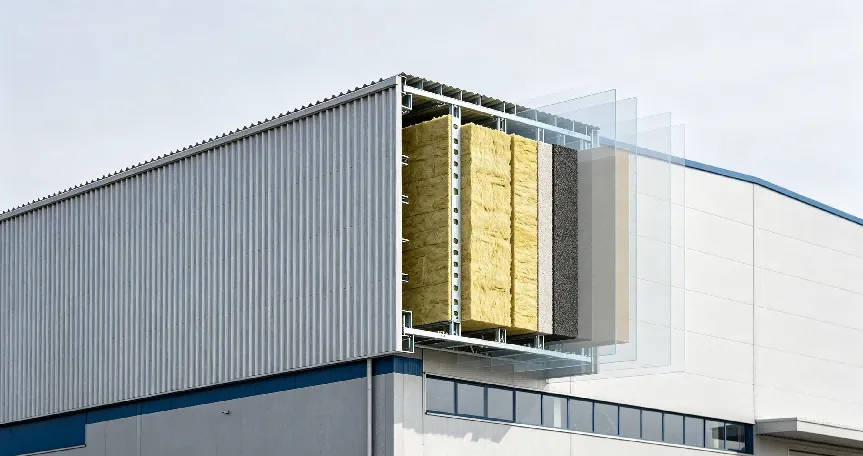
The choice of wall panels largely depends on the building’s intended use and indoor environmental requirements.
Single-layer profiled steel panels are lightweight, economical, and easy to install. They are suitable for certain warehouses, workshops, and buildings where thermal insulation requirements are relatively low. However, their insulation and acoustic performance are limited compared with insulated sandwich panels.
Rock wool sandwich panels provide a combination of thermal insulation and fire-resistant performance. They are commonly considered for industrial buildings, warehouses, workshops, and other applications where fire safety is an important requirement.
For buildings requiring higher thermal insulation performance, such as temperature-controlled facilities, cold storage buildings, and cleanrooms, higher-performance insulated panel systems may be considered. However, thermal performance should not be evaluated separately from fire safety. The core material and complete wall system should meet the applicable local building and fire regulations.
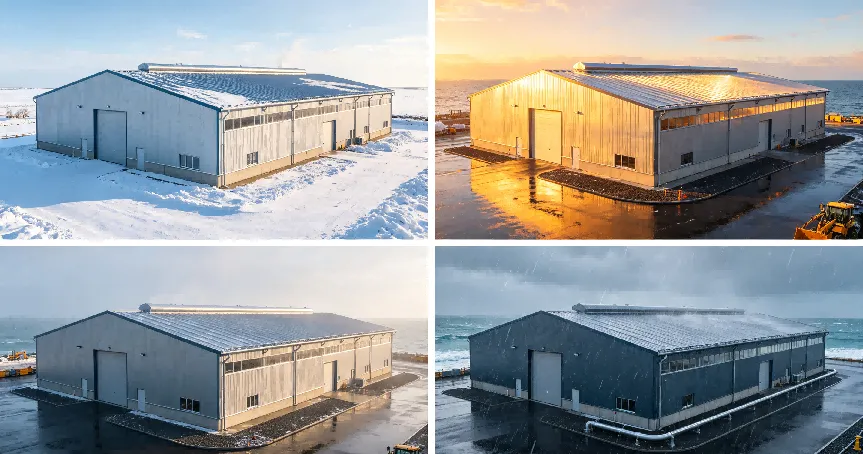
Local environmental conditions are another major factor in choosing roof and wall panels.
In cold climates, buildings generally require better thermal insulation to reduce heat loss and maintain stable indoor temperatures. Panel thickness, insulation material, thermal bridges, and joint detailing should all be considered.
In hot climates, the focus is often on reducing solar heat gain and indoor cooling loads. Appropriate insulation, reflective roof finishes, ventilation, and carefully designed openings can help improve indoor thermal comfort.
In coastal and humid environments, corrosion resistance becomes particularly important. Salt-laden air and high humidity can accelerate corrosion of steel components. Appropriate metallic coatings, paint systems, and corrosion-resistant materials should therefore be selected according to the environmental exposure.
For buildings used in chemical processing, electroplating, acid treatment, or other highly corrosive environments, conventional steel panels may not provide sufficient protection. The cladding system should be selected according to the specific chemical and environmental conditions.
Although material price is an important consideration, it should not be the only factor when comparing roof and wall panels.
A low-cost panel may reduce the initial construction budget but could result in higher maintenance, repair, energy, or replacement costs over the building’s service life.
Before making a final selection, project owners and contractors should consider:
· Fire performance: Verify that the panel core and complete system meet applicable fire-safety requirements.
· Thermal insulation: Select appropriate insulation materials and thickness based on climate and building use.
· Waterproofing: Pay close attention to roof ridges, gutters, eaves, panel joints, penetrations, and flashing details.
· Wind resistance: Check wind loads and fastening systems, especially in coastal and typhoon-prone regions.
· Corrosion resistance: Select suitable steel substrates, metallic coatings, and paint systems according to the environment.
· Material quality: Review product specifications, test reports, certificates, and relevant performance documentation.
· Installation quality: Even high-quality panels can experience leakage or premature deterioration if joints, fasteners, sealants, and drainage details are poorly installed.
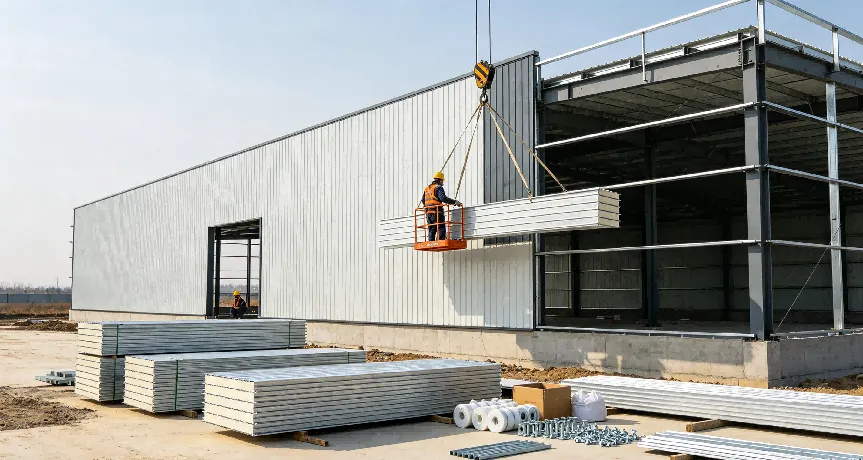
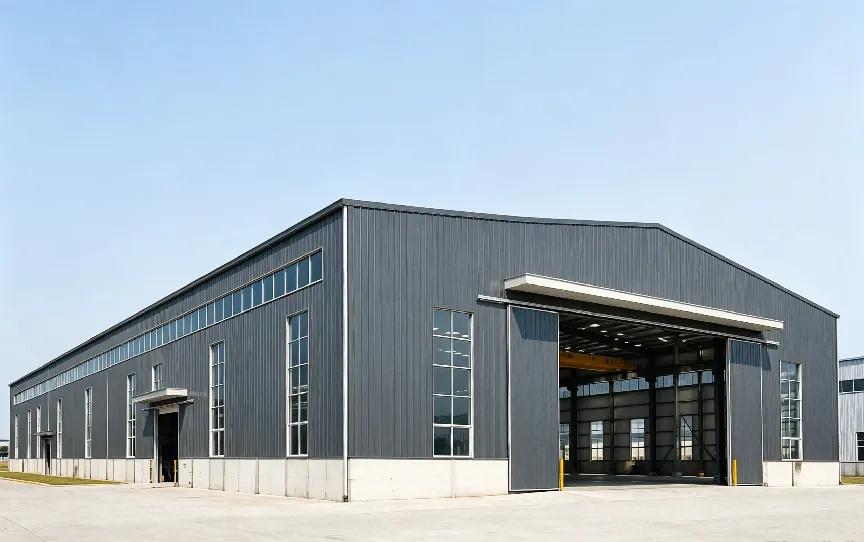
As steel buildings continue to move toward higher standards of energy efficiency, durability, and industrialized construction, panel selection is increasingly shifting from simply comparing material prices to evaluating the overall performance of the building envelope system.
For simple buildings with limited insulation requirements, economical profiled steel panels may be appropriate. For conventional industrial buildings, insulated sandwich panels can provide a balance between thermal performance, fire safety, and installation efficiency. For cold storage and other temperature-controlled applications, higher-performance insulation systems may be required.
Ultimately, the right roof and wall panels should be selected according to the principle of “performance first, climate-specific design, compliance with applicable standards, and consideration of life-cycle costs.”
By taking building function, environmental conditions, fire safety, structural requirements, and installation quality into account, steel building owners can create a more durable, energy-efficient, safe, and cost-effective building envelope.
How to Choose the Right Roof and Wall Panels for Steel Buildings
2026-09-30How Tall Can a Steel Structure Factory Safely Be?
2026-09-28Buying a Used Steel Factory Building: Pros and Cons
2026-09-21High-Rise Steel Framed International Hotel Project Advances with 108,477 m² Total Floor Area
2026-09-17Address: No.1 Shuangxiang Road, Luoxin Industrial Park, Luoyang City
E-mail: info@hcggsteel.com
Hotline: +8618800767079
Create the greatest value for customers
Provide the best quality products and services
+8618800767079
info@hcggsteel.com
No.1 Shuangxiang Road, Luoxin Industrial Park, Luoyang City