




Get a Quote

In 2026, global demand for logistics infrastructure continues to rise rapidly, driven by the expansion of e-commerce, cross-border trade, and automated supply chain systems. Among all industrial building types, heavy-duty steel logistics hubs have become the preferred solution due to their structural efficiency, fast construction cycle, and long-term durability.
However, one of the most frequently asked questions by investors, developers, and procurement managers is still: what is the real cost per square meter for heavy-duty steel logistics hubs in 2026?
The answer is not fixed, but it can be clearly understood through market data, engineering standards, and project-level breakdowns.
Based on global construction benchmarks and steel structure industry reports, the cost per square meter for heavy-duty steel logistics hubs in 2026 typically ranges between:
USD $65 – $165 per m² (basic to advanced industrial grade structures)
USD $120 – $250+ per m² (fully equipped logistics hubs with automation systems)
These figures reflect complete construction scenarios that include steel framing, roofing, wall systems, foundations, and basic industrial installations.
In many international projects, especially in North America and Europe, total investment can exceed these ranges when automation, cold storage systems, or high-load specifications are included.
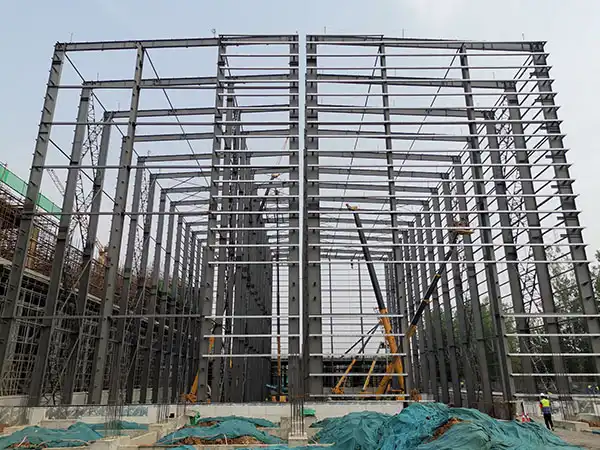
Unlike residential or light commercial buildings, heavy-duty logistics hubs are highly customized engineering systems. Their cost per square meter is influenced by multiple structural and operational variables.
2.1 Structural Load Requirements
A logistics hub designed for pallet racking systems or automated storage requires significantly higher steel tonnage compared to standard warehouses. The heavier the load requirement, the more steel is used per square meter, directly increasing cost.
2.2 Building Height and Span Design
Modern logistics hubs often exceed 12–20 meters in height to support vertical storage optimization. Large-span structures without internal columns also require stronger steel frames and precision engineering, which increases fabrication and installation cost.
2.3 Material Market Conditions in 2026
Steel prices in 2026 remain relatively stable but still elevated compared to pre-2020 levels due to energy costs and global supply chain adjustments. In many regions, steel remains the single largest cost driver in industrial construction, accounting for up to 30–60% of total project cost.
2.4 Automation and Smart Warehouse Systems
The modern logistics hub is no longer a simple storage facility. Many projects now include:
Automated conveyor systems
Robotics picking systems
WMS (Warehouse Management Systems)
Temperature-controlled zones
These upgrades can increase cost per square meter by 30% to 80% depending on complexity.
2.5 Geographic and Construction Conditions
Location significantly impacts cost:
Developed regions (USA, Western Europe): higher labor and compliance costs
Emerging markets: lower labor cost but higher logistics/import costs
Remote industrial zones: additional foundation and transport expenses
Regional variation alone can change total cost per m² by more than 40%.
To better understand investment structure, a typical heavy-duty steel logistics hub can be broken down as follows:
3.1 Steel Structural System
Columns, beams, bracing, connectors
Approx. $30 – $70/m²
Steel framing remains the backbone of the entire facility and usually represents the largest single cost component.
3.2 Envelope System (Roof + Walls)
Insulated sandwich panels or metal cladding
Approx. $15 – $40/m²
Higher insulation standards increase cost but significantly reduce long-term energy consumption.
3.3 Foundation and Civil Works
Soil preparation, concrete slab, reinforcement
Approx. $20 – $60/m²
Ground conditions are often underestimated but can significantly impact total budget.
3.4 Installation and Labor
Steel erection
Mechanical assembly
On-site safety systems
Approx. $10 – $35/m²
Labor efficiency and project management quality directly affect schedule and cost control.
3.5 Mechanical, Electrical, and Logistics Systems (MEP)
Lighting systems
Fire protection
HVAC and ventilation
Approx. $15 – $80/m²
High-spec logistics hubs with automation-ready infrastructure fall into the upper range.
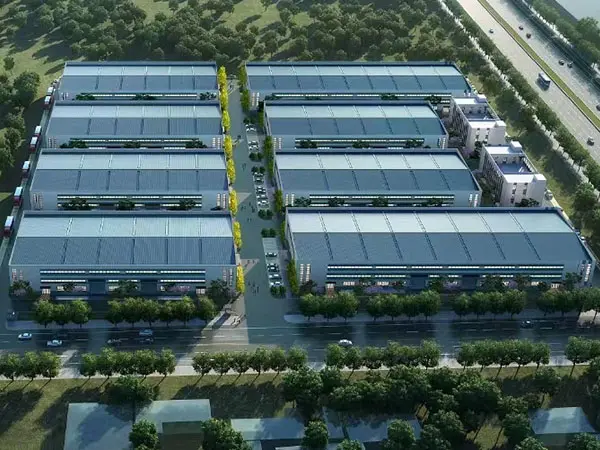
Based on real industrial benchmarks, three common project levels can be summarized:
4.1 Standard Heavy-Duty Logistics Warehouse
Basic steel structure
Manual operations
Estimated cost: $65 – $110/m²
4.2 Advanced Distribution Hub
Reinforced structure
Docking systems
Partial automation
Estimated cost: $110 – $160/m²
4.3 Smart Logistics and Fulfillment Center
Full automation integration
Climate control zones
High-load racking systems
Estimated cost: $160 – $250+/m²
Experienced developers do not simply choose the lowest price per square meter. Instead, they focus on lifecycle efficiency.
5.1 Standardized Modular Design
Using pre-engineered steel components reduces fabrication waste and shortens construction time.
5.2 Early Structural Planning
Optimizing column spacing and building height at the design stage can significantly reduce steel consumption per square meter.
5.3 Material Procurement Strategy
Direct sourcing from steel structure manufacturers often reduces costs by 15%–30% compared to fragmented procurement channels.
5.4 Energy Efficiency Integration
Insulated panels and smart ventilation systems reduce long-term operational costs, even if initial investment is slightly higher.
The logistics sector is evolving from simple storage infrastructure into highly intelligent distribution ecosystems. As a result, cost per square meter is no longer the only evaluation metric.
Investors are increasingly focusing on:
Operational efficiency per square meter
Automation readiness
Energy consumption per unit stored
Expansion flexibility
This shift means that a slightly higher construction cost today may result in significantly lower operational expenses over the next 10–20 years.
The cost per square meter for heavy-duty steel logistics hubs in 2026 cannot be defined by a single number. Instead, it reflects a dynamic combination of structural engineering, material markets, automation level, and regional construction conditions.
In most global scenarios, investors should realistically expect:
$65–$165/m² for standard industrial logistics hubs
Up to $250+/m² for advanced automated facilities
A successful investment decision depends not only on initial construction cost, but also on long-term operational efficiency and scalability.
Buying a Used Steel Factory Building: Pros and Cons
2026-09-21High-Rise Steel Framed International Hotel Project Advances with 108,477 m² Total Floor Area
2026-09-17How to Design an Efficient Steel Structure Warehouse: 8 Key Factors Experienced Buyers Should Know
2026-09-14Comparing Steel Structure vs Precast Concrete for Factories
2026-09-14Address: No.1 Shuangxiang Road, Luoxin Industrial Park, Luoyang City
E-mail: info@hcggsteel.com
Hotline: +8618800767079
Create the greatest value for customers
Provide the best quality products and services
+8618800767079
info@hcggsteel.com
No.1 Shuangxiang Road, Luoxin Industrial Park, Luoyang City