English



Get a Quote
When planning a new factory or industrial facility, one of the most consequential decisions is the choice of building material. For decades, concrete reigned supreme in heavy construction. Yet a quiet shift has occurred: most modern factories now opt for steel structures. This isn’t a matter of trend—it’s the result of engineering economics, project timelines, and long-term operational needs. Below, we dissect the key reasons why steel consistently outperforms concrete for manufacturing facilities, drawing on real-world project experience from specialists like HCGG.
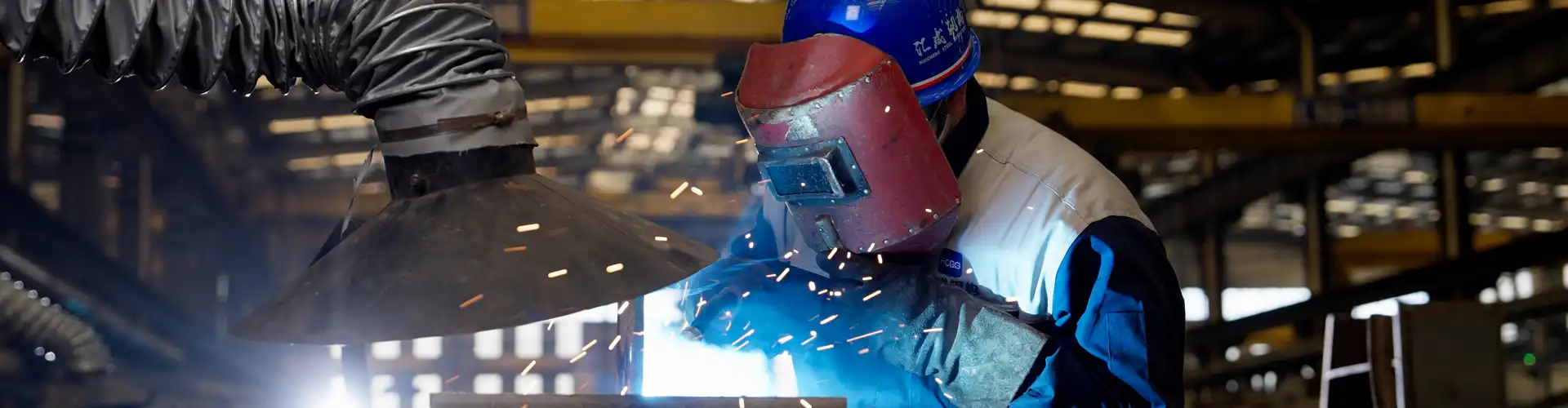
Time is money in industrial construction. Every month a factory is idle represents lost production revenue. Steel structures can be erected 30–50% faster than equivalent concrete buildings. The reasons are structural: steel beams and columns are prefabricated off-site in controlled conditions, then delivered and assembled on-site with bolted connections. Concrete, by contrast, requires formwork, rebar installation, curing time (often 28 days for full strength), and stripping—each stage weather-dependent.
For a 10,000-square-metre factory, a steel frame can be completed in 8–12 weeks, whereas a concrete frame may take 20–28 weeks. This time saving directly reduces financing costs, labour overheads, and accelerates time-to-market. For manufacturers racing to meet demand, the choice is clear.
Companies like HCGG refine this further with modular design, enabling parallel work streams: foundation preparation and steel fabrication happen simultaneously. Their engineers optimise joint designs to minimise on-site welding (which slows progress) in favour of high-strength bolting. This level of pre-planning is rarely feasible with cast-in-place concrete.
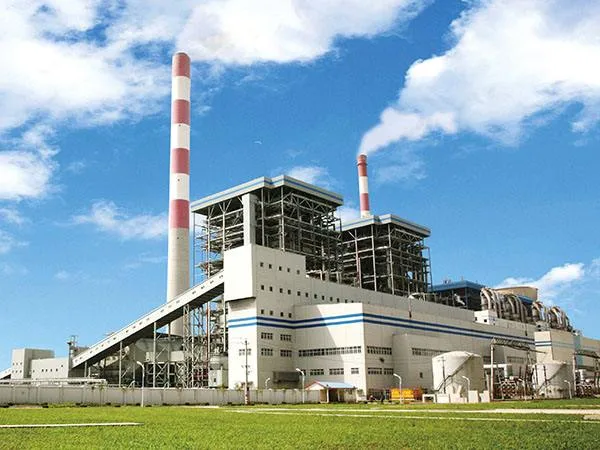
Initial cost comparisons often show concrete and steel within a similar range, but total cost of ownership reveals steel’s edge. Steel structures require less substantial foundations because steel is lighter—a typical steel frame weighs about 60% of a concrete equivalent. This reduces excavation, concrete quantity, and foundation rebar. Moreover, steel’s span capacity (clear spans up to 60 metres without intermediate columns) yields more usable floor area and layout flexibility. A concrete building with similar column-free space would require expensive post-tensioned slabs or transfer beams.
When HCGG engineers conduct cost analysis for clients, they consistently find that over a 25-year horizon, steel structures deliver 15–20% total cost advantage compared to reinforced concrete, even accounting for corrosion protection and fireproofing.
Factories rarely remain static. Production lines change, equipment upgrades happen, and floor layouts must adapt. Steel structures excel at accommodating change. The modular nature allows addition of mezzanines, bridging cranes, or side extensions without penetrating existing foundations. Concrete, conversely, resists modification: cutting openings for new conveyor lines or adding mezzanine supports often triggers expensive structural investigations and shoring.
Consider a factory that needs to double its height for vertical storage. A steel building can be designed with column splices that allow future elevation. A concrete frame would require tearing down and rebuilding. For industries like logistics and advanced manufacturing, this adaptability is a deal-maker.
Steel’s strength-to-weight ratio permits column-free spans of 30–60 metres—ideal for warehouses, aircraft hangars, and assembly halls. Equivalent concrete structures would need intermediate columns every 8–12 metres, which obstructs material flow and reduces usable space. HCGG’s projects routinely achieve 50-metre clear spans with tapered welded beams, enabling clients to reconfigure layouts at will.
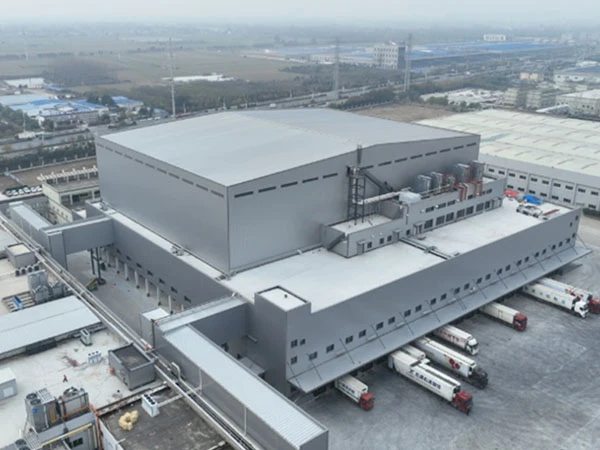
Both materials are durable, but their failure modes differ. Concrete can suffer from spalling, carbonation, and reinforcement corrosion—especially in humid factory environments or where de-icing salts are used. Steel, when properly protected with paint systems, hot-dip galvanisation, or intumescent coatings, resists many environmental attacks. Moreover, steel is 100% recyclable; up to 95% of structural steel is recovered and reused at end of life. Concrete has a much lower recycling rate, and its production accounts for approximately 8% of global CO₂ emissions. For companies seeking green certifications (LEED, BREEAM), steel offers a clearer path.
Maintenance costs over a 50-year lifespan are comparable, but steel’s predictability (simple paint inspection cycles) contrasts with concrete’s hidden deterioration (cracks, delamination). HCGG recommends life-cycle cost modelling for each project; in most industrial cases, steel’s net present maintenance cost is 10–20% lower.
In earthquake-prone regions, steel frames provide superior ductility—they can bend and absorb energy without brittle failure. Concrete structures require careful detailing of reinforcement to achieve similar performance, and even then, can suffer irreparable cracking. Steel’s high strength-to-weight also reduces inertial forces during seismic events. Many building codes now permit steel structures to be designed with lower base shear coefficients, saving further costs.
Similarly, for factories in hurricane or high-wind zones, steel’s continuous load paths and moment-resisting frames offer reliable performance. HCGG engineers routinely design steel buildings to withstand 200 km/h winds with minimal damage, while concrete walls require special reinforcement and often thicker sections.
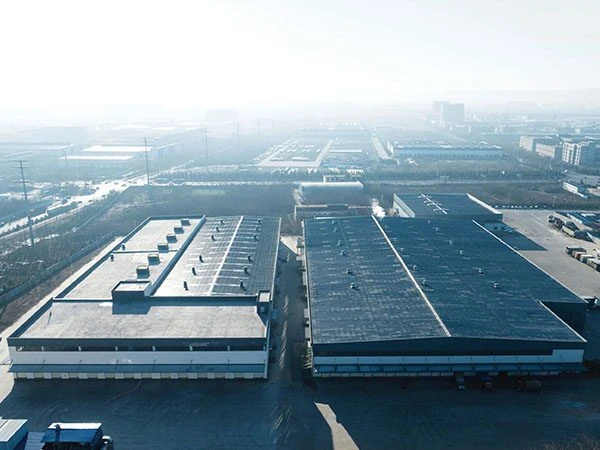
The evidence is compelling. For factories prioritising speed, flexibility, lifecycle cost, and adaptability, steel structure systems—especially those engineered by experienced providers like HCGG—consistently outperform concrete. While concrete remains appropriate for certain niche applications (e.g., blast-resistant walls, high-mass vibration damping), the general industrial market has converged on steel. When you choose steel, you choose a building that can evolve with your business, deliver faster returns, and maintain value over decades.
Steel vs Concrete: Why Factories Choose Steel Structure
2026-06-08How Steel Structure Factories Reduce Construction Time by 50%
2026-06-01Loading Dock Design for Heavy-Duty Steel Logistics Warehouses: Engineering Efficiency, Safety, and Long-Term Performance
2026-05-28Energy-Efficient Insulation for Cold Chain Steel Logistics Centers: A Comprehensive Guide to Performance, Cost Reduction, and Sustainability
2026-05-19Address: No.1 Shuangxiang Road, Luoxin Industrial Park, Luoyang City
E-mail: info@hcggsteel.com
Hotline: +8618800767079
Create the greatest value for customers
Provide the best quality products and services
+8618800767079
info@hcggsteel.com
No.1 Shuangxiang Road, Luoxin Industrial Park, Luoyang City