


Get a Quote
In commercial and industrial construction, time is money — every day of delay impacts budgets, resource allocation, and project profitability. Traditional methods such as reinforced concrete or masonry often require sequential casting, curing, and finishing, stretching timelines by months. Steel structure factories — exemplified by industry leader HCGG — have revolutionized this paradigm, routinely delivering projects in half the time. This article dissects the technical mechanisms, workflow optimizations, and engineering principles that make a 50% reduction in construction time achievable, providing decision-makers with a clear framework for evaluating prefabricated steel solutions against conventional approaches.
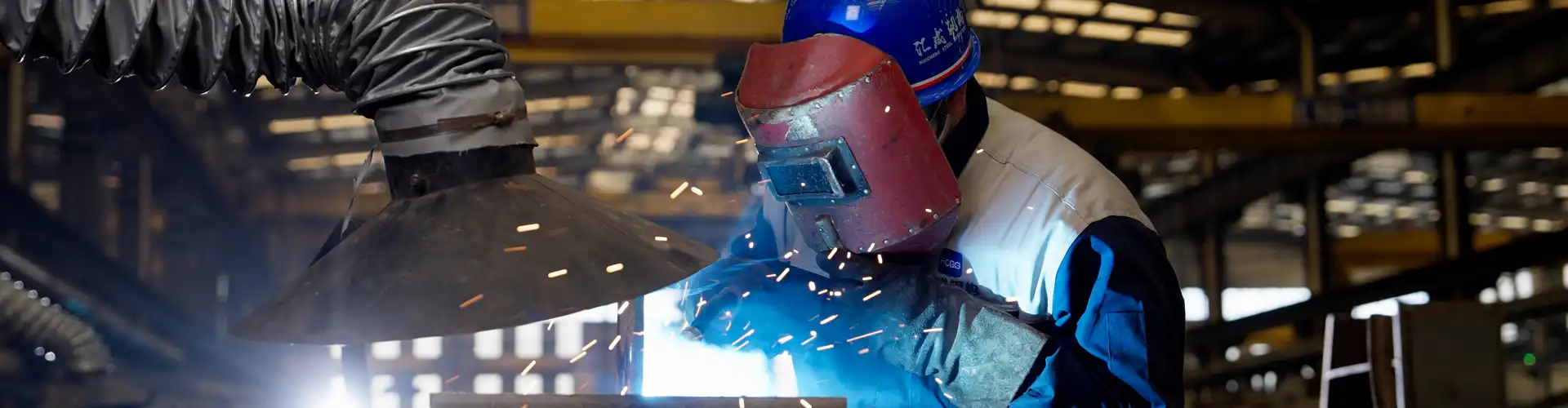
The single most impactful factor is the decoupling of manufacturing from on-site work. In traditional construction, foundations must be poured and cured before structural framing can begin. Steel structure factories operate on a parallel timeline: while site crews prepare footings and foundations, the factory simultaneously fabricates columns, beams, roof trusses, and connection plates. HCGG's facilities utilize CNC-controlled plasma cutting, robotic welding, and automated shot blasting to produce components at a rate of up to 150 tons per week. This parallelism effectively eliminates the sequential bottleneck, often cutting total project duration by 40–50%.
Advanced ERP systems synchronize production with site progress. Components are fabricated in sequence matched to the erection plan, then delivered in phased batches. This avoids material pile-ups and minimizes double handling — a common cause of delays in traditional construction.
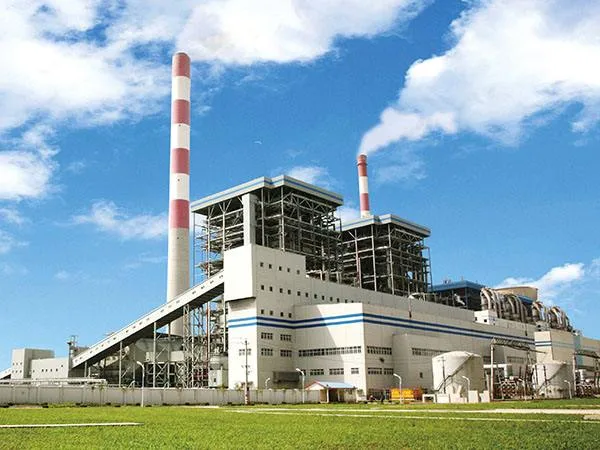
Rework on a conventional construction site — cutting rebar to the wrong length, patching uneven concrete — can consume 10–15% of total labor hours. Steel structure factories use 3D BIM models that generate exact shop drawings and CNC machine code. Tolerances are maintained within ±2 mm for all connection points, ensuring that every beam and column arrives ready to bolt into place. HCGG employs laser scanning to verify each fabricated element against the digital twin, reducing field-fit adjustments to near zero. The result: erection crews can assemble a 10,000 m² warehouse in under six weeks, versus 14–16 weeks for a comparable concrete frame.
Steel's inherent advantages in connection speed are well documented, but the factory's role in maximizing that advantage is often overlooked. High-strength bolt assemblies, preweld cleats, and slotted connections are designed and tested in the factory to guarantee fast, safe field assembly. A typical steel column can be erected, plumbed, and bolted in under 20 minutes by a four-person crew. Compare that to the multi-day cycle of formwork, rebar tying, pouring, and curing for a concrete column — especially in cold weather when curing can take 7+ days. By optimizing connection details for bolt-up rather than welding, HCGG reduces on-site labor by 60% and eliminates weather-related downtime.
Factory-fabricated steel frames can incorporate pre-punched holes, welded brackets, and hanger supports for MEP systems. This eliminates the need for on-site drilling and modification, which typically adds 10–15 days to a conventional project. Metal decking with integrated shear studs also allows concrete floor slabs to be poured in a single, continuous operation — further compressing schedule.
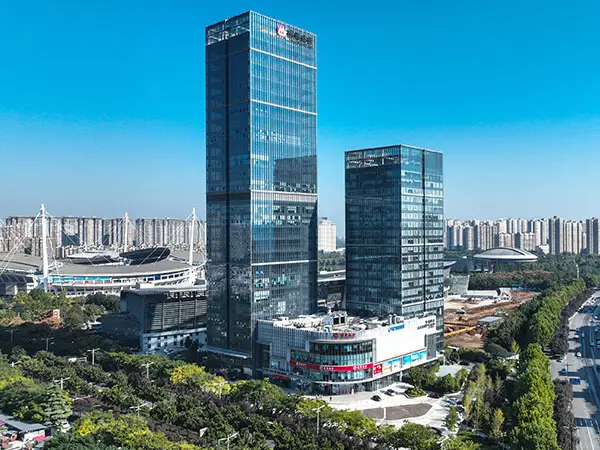
Traditional construction quality depends on on-site workmanship, which varies by crew and weather. Factory-controlled environments in facilities like HCGG's ensure consistent welding procedures, corrosion protection, and dimensional accuracy. Every weld is inspected via ultrasonic testing before dispatch; every coating batch is tested for thickness and adhesion. This pre-certification means no surprises during mandatory third-party inspections at the project site. Defects that would stop a concrete pour for days are caught and corrected in the factory without impacting the site schedule.
A 15,000 m² high-bay logistics center in the southeastern region — typically requiring 12 months using concrete — was completed in just 6.5 months using HCGG's steel structure system. The project involved 1,200 tons of fabricated steel, 95% of which arrived within the planned one-hour delivery windows. On-site erection averaged 40 tons per day, with zero rework due to fabrication errors. The client reported a total schedule compression of 46% compared to their original concrete design.
Steel structure factories don't stop at the frame. Many offer integrated wall and roof cladding systems that are factory-cut, pre-drilled, and color-matched. Insulated metal panels can be installed in half the time of built-up walls because they attach directly to girts without separate insulation or vapor barrier layers. HCGG's enclosed-production approach delivers these panels pre-laminated with weather-resistant coatings, further reducing on-site handling. When the entire building envelope arrives as a kit of parts that fits precisely, the weathertight phase is reached weeks earlier, allowing interior finishing activities to commence sooner.
A well-managed steel structure factory project typically follows this timeline (for a 5,000 m² industrial building):
- Design & Engineering: 4 weeks (parallel with site prep)
- Foundation Work: 6 weeks (completed while fabrication runs)
- Fabrication: 8 weeks (overlaps with site work by 4 weeks)
- Steel Erection: 4 weeks
- Cladding & MEP Rough-In: 3 weeks
- Interior Finish & Commissioning: 4 weeks
Total elapsed: ~17 weeks. A comparable concrete building with sequential trades would take 32–36 weeks — a saving of 47–53%.
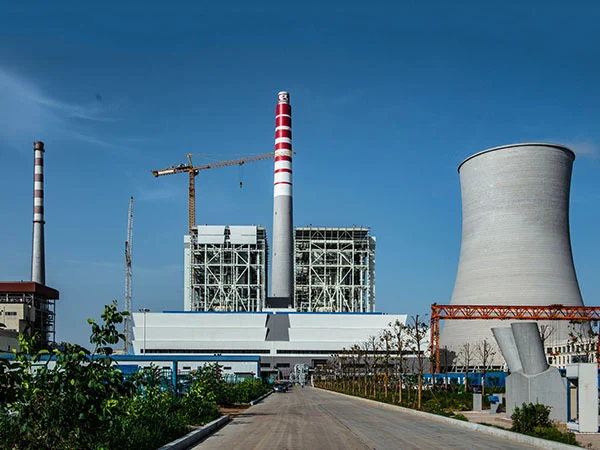
The 50% construction time reduction achieved by steel structure factories is not a marketing exaggeration; it is the arithmetic result of parallelized workflows, factory precision, faster connections, and quality assurance. For project owners evaluating building systems, the key question is not if steel can deliver faster timelines, but which factory partner — like HCGG — has the process maturity to guarantee that speed without compromising safety or quality. By choosing a steel structure factory with proven off-site manufacturing capabilities, stakeholders can compress their construction schedules by half, accelerate time to revenue, and reduce financing costs — all while maintaining rigorous quality standards.
Magnetic vs Bolted Steel Factories: Which Lasts Longer?
2026-10-12HCGG Steel Structure Showcases PEB Building Solutions at CONSTRUCTION INDONESIA & MINING 2026 in Jakarta
2026-10-10Steel Factory Permits: Zoning and Building Code Tips
2026-10-05How to Choose the Right Roof and Wall Panels for Steel Buildings
2026-09-30Address: No.1 Shuangxiang Road, Luoxin Industrial Park, Luoyang City
E-mail: info@hcggsteel.com
Hotline: +8618800767079
Create the greatest value for customers
Provide the best quality products and services
+8618800767079
info@hcggsteel.com
No.1 Shuangxiang Road, Luoxin Industrial Park, Luoyang City