




Get a Quote
How Long is the Lifespan of Steel Structure Buildings? Six Key Factors Determining Their Long-Term Performance
As the global construction industry moves towards higher efficiency, greener practices, and industrialization, steel structure buildings, with their advantages of fast construction speed, high structural strength, high space utilization, and recyclability, are widely used in industrial plants, warehouses, logistics centers, commercial buildings, agricultural facilities, and large public buildings.
For overseas clients, when choosing steel structure buildings, in addition to initial purchase costs, a core concern is: how many years can a steel structure building actually last?
In fact, the lifespan of a steel structure building is not a fixed number. A properly designed, manufactured, correctly installed, and well-maintained steel structure building can typically achieve a design lifespan of over 50 years. Some high-quality steel structure buildings can be used stably for a long time with proper maintenance. What truly determines the lifespan of a building is not just the steel itself, but the entire lifecycle from design and production to use and maintenance.
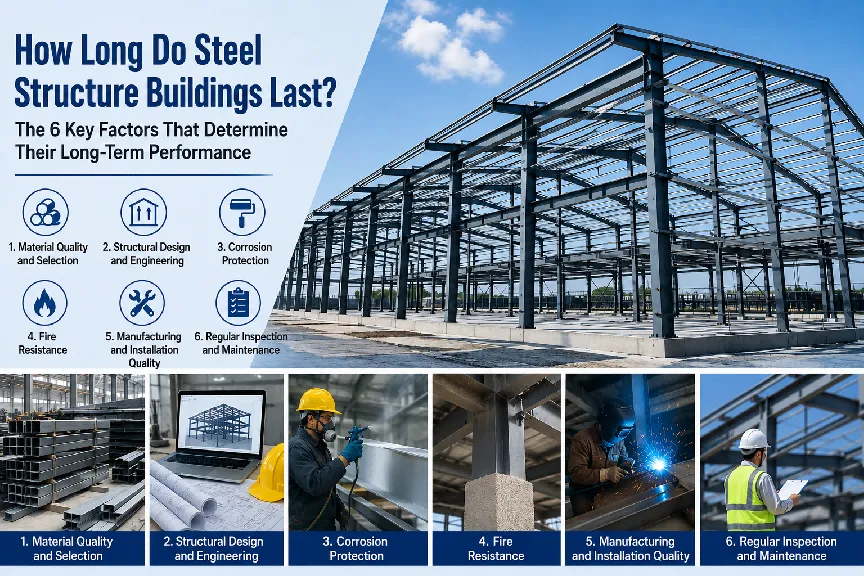
I. What Does the Lifespan of a Steel Structure Building Primarily Depend On?
The long-term performance of steel structure buildings is typically affected by the following six factors:
1. Steel Quality and Material Selection
Steel is the core material of steel structure buildings. Its strength, toughness, corrosion resistance, and quality stability directly affect the long-term safety of the building.
Different building projects have different requirements for steel grades and performance. For example, industrial plants, warehouses, large-span buildings, and buildings in harsh environments require the selection of appropriate steel based on actual loads, climate conditions, and usage environment.
High-quality steel, combined with standardized quality inspection, can effectively reduce the risks of structural fatigue, deformation, and material failure, laying the foundation for the long-term stable use of the building.
2. Scientific and Rational Structural Design
Excellent structural design is a crucial prerequisite for extending the service life of steel structure buildings.
The design process needs to comprehensively consider factors such as building loads, wind loads, snow loads, seismic action, span, height, functional use, and local climate conditions. For export projects, it is also necessary to adopt the corresponding building codes and design standards according to the country or region where the project is located.
A well-designed structural system not only ensures building safety but also optimizes steel usage, reducing overall project costs while meeting structural performance requirements.
3. Corrosion Protection
Corrosion is a significant factor affecting the long-term performance of steel structures.
Prolonged exposure to humidity, salt spray, industrial pollution, or other corrosive environments, without effective protection, can lead to gradual thinning of steel components, impacting structural load-bearing capacity.
Therefore, steel structures typically require appropriate corrosion protection solutions based on their intended use, such as anti-rust primers, intermediate coats, and topcoats, or surface protection methods like hot-dip galvanizing.
For coastal areas, islands, high-humidity regions, and industrial environments with chemical corrosive agents, it is crucial to fully consider corrosion resistance levels and post-construction maintenance requirements during the design phase.
4. Fire Resistance
Although steel is a non-combustible material, its strength and stiffness decrease significantly at high temperatures. Therefore, fire resistance design for steel structures is equally important.
Depending on the building's intended use and local fire codes, the fire resistance of steel structures can be improved through fire-retardant coatings, fire-resistant panels, and concrete cladding. A well-designed fireproof structure not only ensures building safety but also helps slow structural performance degradation during a fire, buying more time for evacuation and rescue operations.
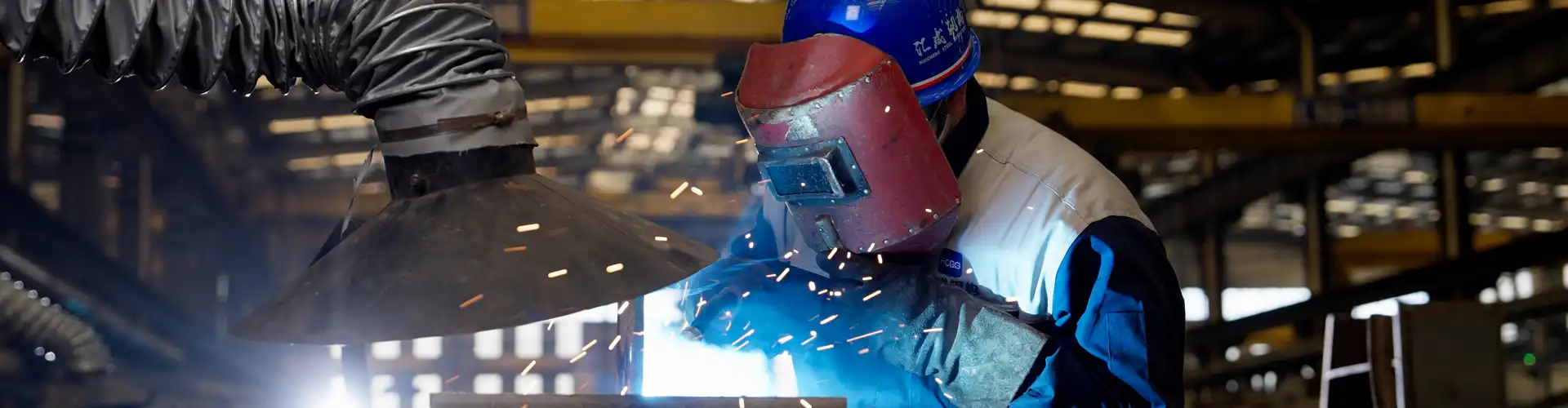
5. Manufacturing and Installation Quality
Even with an excellent design, substandard manufacturing and on-site installation can affect the actual lifespan of a steel structure building.
The cutting, welding, drilling, assembly, surface treatment, and dimensional accuracy of steel components all require strict control. During on-site installation, component connections, bolt tightening, welding quality, and overall verticality are equally crucial.
Therefore, for overseas steel structure projects, selecting suppliers with mature production capabilities and quality control systems is a vital step in ensuring the long-term performance of the project.
6. Regular Inspection and Maintenance
Steel structure buildings are not "completely maintenance-free after installation."
During long-term use, regular inspections of steel columns, beams, connection nodes, roofing systems, wall systems, and drainage facilities are essential to promptly identify problems such as corrosion, coating aging, loose bolts, and roof leaks.
For areas showing localized corrosion or coating damage, timely cleaning, rust removal, and re-protection are essential. Timely maintenance prevents small problems from escalating into major structural safety issues.
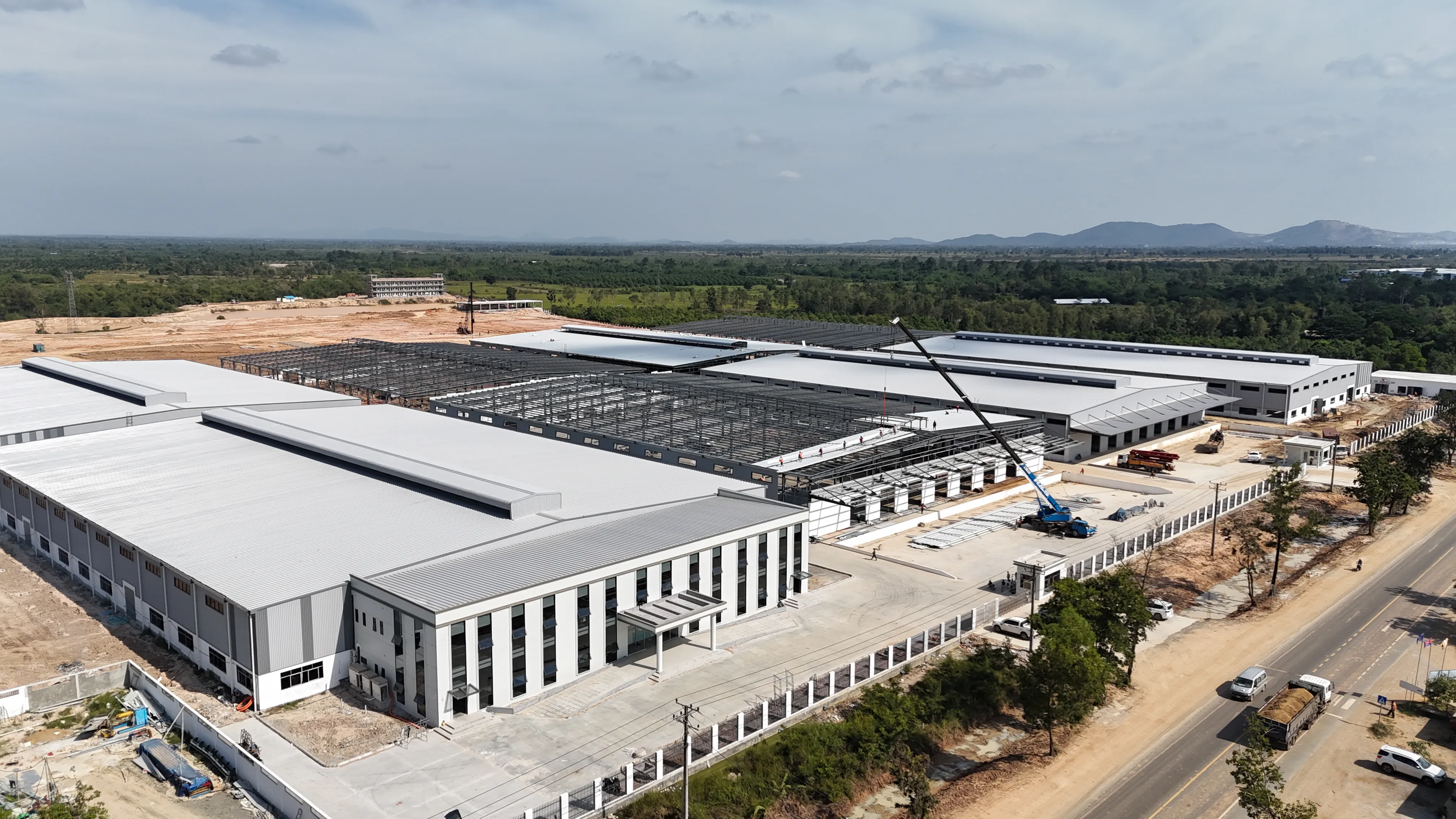
Can steel structure buildings last more than 50 years?
The answer is: yes, but the actual lifespan depends on project design standards, material quality, environmental conditions, construction quality, and maintenance levels.
It's important to note that "design service life" and "actual service life" are not entirely the same concept.
The design service life is the target lifespan determined by specifications during the engineering design phase. However, the actual lifespan of a building is also affected by factors such as local climate, usage intensity, corrosive environment, maintenance frequency, and subsequent modifications.
Therefore, rather than simply pursuing a fixed "service life," it's more important to consider the quality and maintenance of steel structure projects from the perspective of the entire building lifecycle.
Choosing a reliable steel structure supplier is equally important.
For overseas buyers, steel structure buildings are typically a long-term investment. While price is important, factors such as material quality, design capabilities, processing precision, surface treatment, packaging and transportation, and on-site installation guidance also significantly impact the long-term performance of the final project.
A mature steel structure manufacturer should be able to provide clients with a one-stop solution, starting from project needs, encompassing structural design, steel component production, corrosion protection, and supporting enclosure systems, and should tailor designs to the environmental and architectural requirements of the project site.
Conclusion
Steel structure buildings possess excellent strength, construction efficiency, and sustainability; their long-term performance is not determined by a single factor.
High-quality materials + scientific structural design + effective corrosion protection + appropriate fire protection + precise manufacturing and installation + regular maintenance collectively form the foundation for the long-term stable operation of steel structure buildings.
For overseas clients planning to construct industrial plants, warehouses, logistics centers, or other steel structure buildings, selecting appropriate design schemes and reliable steel structure suppliers at the initial stage of the project will help reduce maintenance costs throughout the building's lifecycle and achieve a more stable and durable user experience.
Buying a Used Steel Factory Building: Pros and Cons
2026-09-21High-Rise Steel Framed International Hotel Project Advances with 108,477 m² Total Floor Area
2026-09-17How to Design an Efficient Steel Structure Warehouse: 8 Key Factors Experienced Buyers Should Know
2026-09-14Comparing Steel Structure vs Precast Concrete for Factories
2026-09-14Address: No.1 Shuangxiang Road, Luoxin Industrial Park, Luoyang City
E-mail: info@hcggsteel.com
Hotline: +8618800767079
Create the greatest value for customers
Provide the best quality products and services
+8618800767079
info@hcggsteel.com
No.1 Shuangxiang Road, Luoxin Industrial Park, Luoyang City