English



Get a Quote
When planning a new industrial facility, the first question that arises is often about cost. Is a steel structure factory genuinely cheaper than a traditional reinforced concrete or masonry building? The answer is not a simple yes or no, as it involves comparing initial construction expenses, timeline savings, maintenance costs, and long-term flexibility. Industry experts at HCGG have helped dozens of clients evaluate these factors across projects of varying scales. This article breaks down the real cost differences between steel structure factories and conventional builds, focusing on data-driven insights to help you make an informed decision.
Looking purely at material and labor costs, a steel structure factory generally offers a 15-30% reduction in upfront spending compared to a traditional concrete or brick building of the same square footage. The reasons are structural efficiency and simplified foundation requirements. Steel’s high strength-to-weight ratio means fewer columns and lighter foundations. Traditional builds require thicker walls, deeper footings, and more earthwork. Below is a typical breakdown:
The table below (simplified) shows typical cost ranges per square foot for a mid-size factory (10,000 sq ft) in a moderate climate, based on industry averages provided by HCGG project archives:
These numbers clearly indicate a lower initial investment for steel. However, total cost must include assembly, which is where steel gains even more advantage.
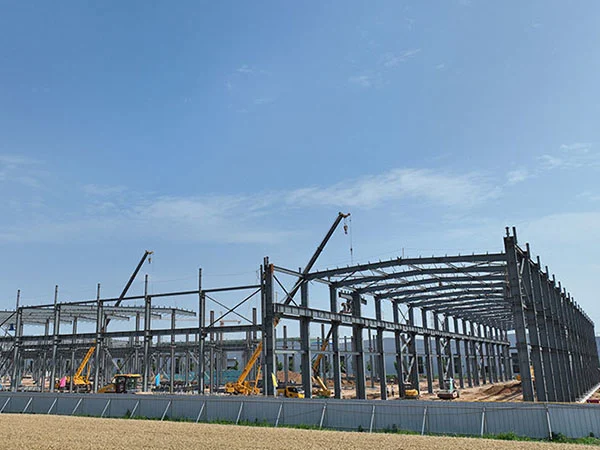
Time is money. A steel structure factory can be erected 30-50% faster than a comparable traditional building. Fabrication happens simultaneously with site preparation; once the foundation is ready, steel components arrive and are bolted together quickly. Traditional construction requires sequential curing of concrete, waiting for mortar to set, and longer drying times. Reduced construction period translates to lower general conditions costs (site trailers, temporary utilities, management fees) and earlier revenue generation. HCGG observes that clients often save 2-4 months on a typical 6-month project, which can represent thousands of dollars in saved rent or earlier production income.
Initial cost is only part of the equation. Steel structure factories often have lower total cost of ownership over 20+ years. Consider:
Cheaper does not mean lower quality when the material is properly engineered. High-grade structural steel provides consistent strength, dimensional accuracy, and quality control from factory fabrication. Traditional construction is more dependent on on-site craftsmanship, which can vary. HCGG emphasizes that steel structure factories meet or exceed building codes for strength and safety, especially when designed for specific local loads (snow, wind). Additionally, clear-span steel designs offer unobstructed interior space crucial for production lines, warehouse racking, or crane operations — a functional advantage that concrete columns often restrict.
There are scenarios where traditional construction could be comparable or even cheaper. For example, in regions with extremely low labor costs and abundant local materials (e.g., cheap bricks or sand), the material cost gap narrows. Also, if the factory requires extensive chemical containment, multi-story design with heavy floor loads, or specific architectural aesthetics that concrete provides naturally, traditional methods might be preferred. But for the vast majority of single-story manufacturing or warehouse facilities, steel structure offers clear cost and speed advantages.
Deciding between a steel structure factory and a traditional build requires evaluating both short-term capital outlay and long-term operational savings. Based on HCGG’s extensive experience, steel structure factories are typically cheaper to build, faster to complete, and less expensive to maintain over the building’s life. For most industrial projects, steel presents the more economical and versatile solution. However, a site-specific analysis considering labor rates, local regulations, and intended use is essential. We recommend consulting with structural engineers and experienced contractors to get accurate pricing for your specific location and requirements.
Address: No.1 Shuangxiang Road, Luoxin Industrial Park, Luoyang City
E-mail: info@hcggsteel.com
Hotline: +8618800767079
Create the greatest value for customers
Provide the best quality products and services
+8618800767079
info@hcggsteel.com
No.1 Shuangxiang Road, Luoxin Industrial Park, Luoyang City